The author is a journalist based in Karen State. They received support from The Kite Tales to write these diaries.
Myanmar-Thai border
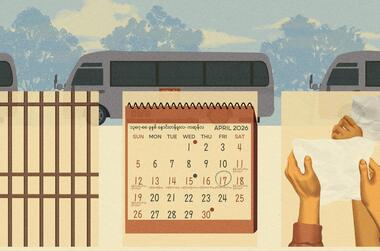
April 18th. It is the final day of Thingyan, Myanmar’s New Year festival and the air is heavy with heat. On the road people are laughing and splashing each other gleefully with cool water, keeping the Thingyan tradition even though they are far from home. I have crossed the border specifically for this, to see this place.

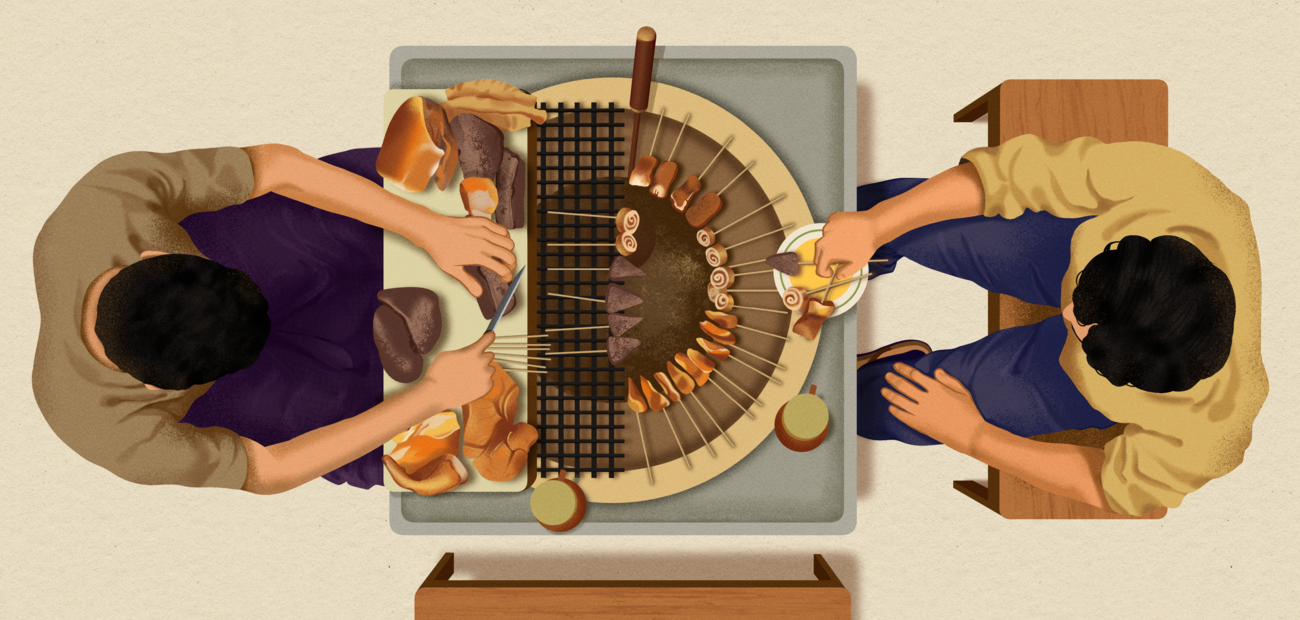
I leave my unlicensed motorcycle near a wall of tightly-packed dwellings that lean against each other for support and almost remind me of a claustrophobic slice of suburban Yangon. But I am in Thailand now, at the sprawling Nu Poe refugee camp. Near one of the entrances, tucked against the fence of a small home, I find the place I’m looking for: a wet-thar-dote-htoe (pork on stick) stall.
The stall is modest, a three-foot-wide tray top surrounded by long wooden benches that could barely seat two people comfortably. Behind the counter sits the vendor. He is thin, fair-skinned and has the gentle authority of a kindly schoolteacher.
At a wet-thar-dote-htoe stall, pork cuts and offal are slow-braised in seasoned broth until tender, then sliced and skewered. They are kept warm in the simmering broth while the vendor sells them to customers.
This looks like any other pork offal skewer stall you’d find on a street corner in Yangon, though the presence of only two bottles of chili sauce suggests business isn’t that good. For me, however, this is a rare luxury. In the five years since I fled to the revolutionary zones following the military coup, this is only the second time I’d sat at a proper pork offal skewer stall. In the Karen hills where I took shelter, the locals prefer seik-kaw—a heady mix of raw meat, offal, and blood, over the skewered, simmered delicacies of the city.

The meat on the skewers has been preserved, giving it a toughened texture; some pieces are so firm they defy an easy chew. After a few sticks, I strike up a conversation, curious about the man behind the broth.
He has lived here with his family for three years, after fleeing the central Sagaing Region, where his wife left her job as a teacher to join the civil disobedience movement following the coup.
“This makes things bearable,” he tells me, gesturing to the pork tray as if it were a life raft. “For some, things have become impossible.”
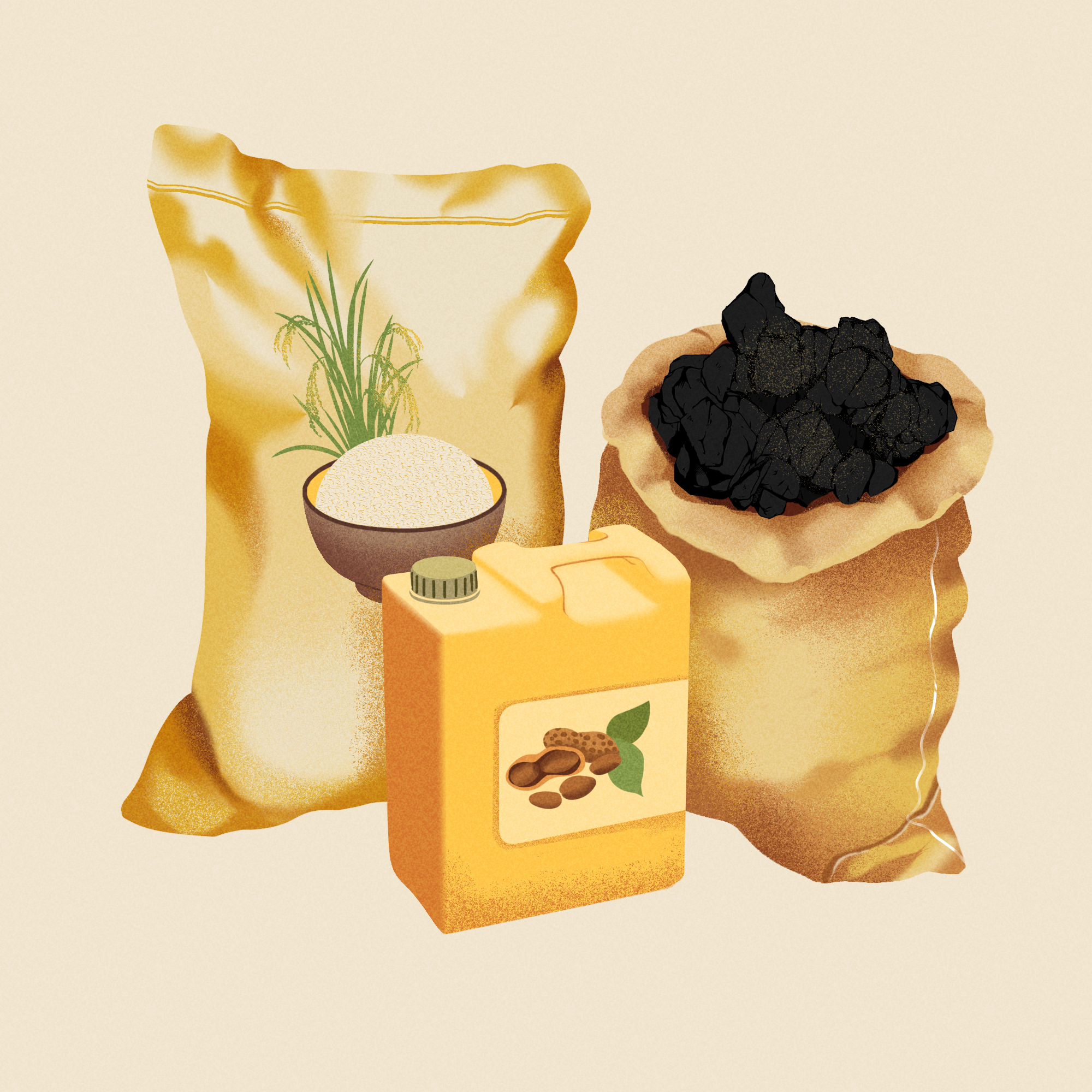
Life in the camp has been tough. One of the reasons he turned to selling pork on sticks was to pay for necessities, after rations of rice, oil and charcoal were cut. Despite the complaint of cost, he keeps the coals glowing so his customers can enjoy a warm bowl of pork broth. Then, he says, there’s the school fees for his three children. It is a heavy burden for a family in exile.
“We only manage because we have relatives abroad who send a little help,” he says, his hands moving rhythmically as he cuts meat for the next batch.
Looking at the skewers, I notice how precisely the offal has been sliced; four months into this new business, he has clearly mastered the craft of pork on sticks.
This camp was established back in 1997 for Karen villagers fleeing the decades-long conflict between the Karen National Union and the Burmese military. Today nearly 15,000 people live here, many pinning their hopes on resettlement in a third country. But the man in front of me doesn’t seem to dream of far-off lands. His focus is entirely on the present, on selling today’s batch of pork skewers. The fewer sticks left in front of him, the brighter his smile becomes.
Eventually I get up to make room for new customers. I watch him take a piece of tissue, wipe a smudge of red chili from the sauce bottles and set it down for the newcomers. In the midst of conversations in Karen and Thai languages, he remains a lone speaker of Burmese, falling into easy rhythm with those who sit down to eat.
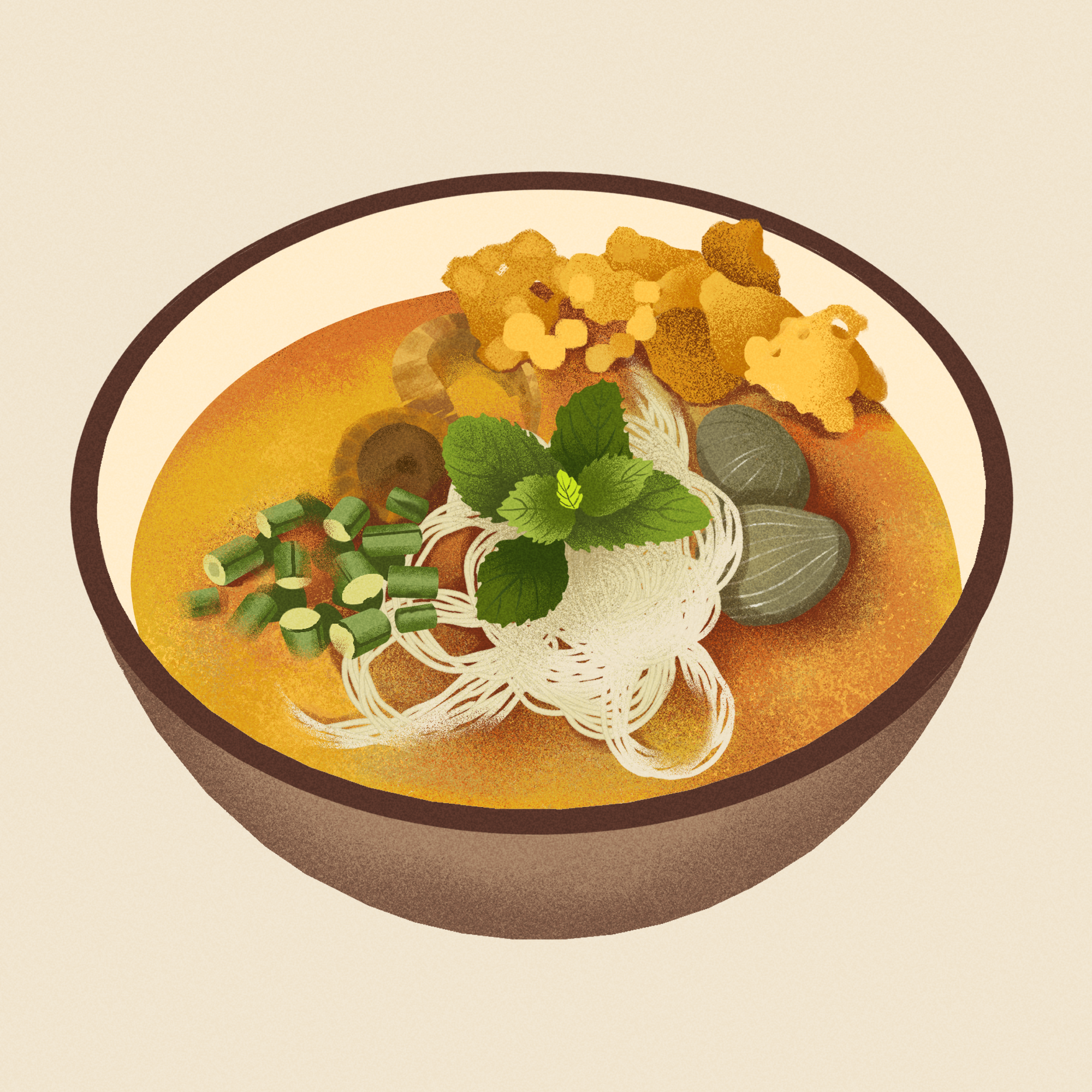
Not far from the stall, a small pavilion thatched with coconut leaves plays Thingyan music at a modest volume while children splash water. Despite the rations being cut, I see a beautiful act of communal tradition: a Satuditha—a free food donation—offering Mohinga, Myanmar’s delicious fish soup. Even those living on the far fringes of the camp come down for a bowl.
Mohinga is my weakness. Without waiting for a formal invitation, I grab a bowl and eat heartily. In a region where one usually finds Pad Krapow (Thai stir fried pork and holy basil) or Kway Teow (stir fried rice noodles), a bowl of Mohinga with mint, long beans and fried beans makes me homesick.
I suddenly miss my mother. She would always have a pot of Mohinga waiting when I came home from working in the city. To be honest, her Mohinga wasn't even that great, but in these years of displacement, it is one of the things I miss most.
After eating, I walk back to my bike and begin the ride back toward my own side of the border, the side where the sky holds the sound of jet engines and the ground shudders with bombs. As soon as I leave behind the sign that reads "Greetings from Thailand" my tires hit the first gaping pothole with a jarring thud-thud. I realise, with a bitter certainty, that I’m back in Myanmar.
The artwork is by Songbird who is receiving support from The Kite Tales to produce illustrations.