The author is a journalist from Magway Region. They received support from The Kite Tales to write these diaries.
I arrived in this village of the Yaw region in Magway in late 2025 and it took a few months to settle into the rhythm of daily life and my work as a journalist. In early February, I was staying in a wooded area a short distance from the village, confined to my bed with an IV drip, fighting off a fever and the exhaustion of a lingering illness.
Outside people were busy getting ready for a communal novice initiation ceremony (Shinpyu Pwe) scheduled to be held later that month. Daily routines were already infused with the preparations. Kneading puffed rice balls, frying crispy Mont Lay Bway, tending to chores at the monastery, heading out to work in the fields.
But I cannot remember these happier days without the horror of what came later on February 5th.
In the Yaw region, a Shinbyu Pwe is often a large celebration where the community comes together for merit-making. I first witnessed this tradition when I arrived in the area in 2024 for the first time. It’s quite different from what I grew up with in central Myanmar, where a single family might host.
Back home, the eve of the ceremony involves a procession of the would-be-novices and a community dinner. On the big day, there’s traditional music, a feast, and by midday, after the boys' hair is shaved and they are dressed in monk’s robes, the merit is sealed. In Yaw, however, the ritual hair-shaving happens three to five days early, led by a ceremonial master. There is a communal meal on the eve of the main day and then early the following morning the procession circles the village once and the monastery three times before the final sermon and robing.
On February 5 people began returning from the fields as normal at around 4:30pm. Then, just before 5:00pm, a warning signal cut through the air: a jet fighter had taken off from the Magway airbase. Like everyone else, I heard it, but we never imagined we were the target.
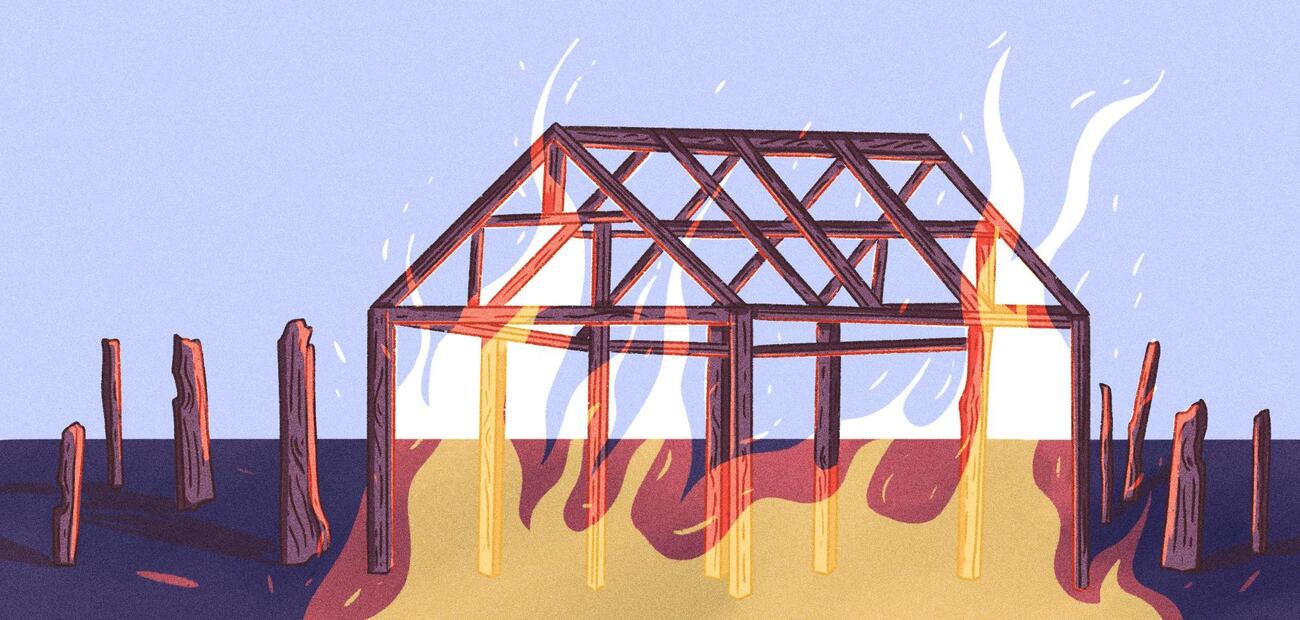
A moment later, two explosions rocked the air. My first thought was that they had hit nearby, but not our village. Then, a cold dread set in. I worried for the people in the village; the houses there are built so close to each other that I feared a single hit could level everything. On the third strike, they hit the heart of the village.
As a photojournalist, every instinct told me to go and document the scene. But I was physically broken by illness, and the jet was still circling above. I stayed back, watching thick plumes of smoke billow into the sky, the glow of fire turning the horizon a violent red.
Hours later, a local sent me photos and videos of the aftermath. The entire northern side of the main village road was strewn with debris. I saw the body of a woman and those of two young children. Looking closer, I realised the woman was missing her head and her left arm. The children’s bodies were equally shattered. The house that took the direct hit had been home to a stroke-stricken mother and her daughter. By a cruel twist of fate, a mother and two ten-year-old girls who had been walking through the village selling footwear had run into that house to seek shelter when they heard the plane. They were inside when the bomb hit.
The physical reality of it - the scattered remains and bodies - is a kind of pain I cannot find the words to describe.
That night, the people of the village had to gather what was left of their neighbours, piece by piece, to take them to the crematorium. Flesh was found under piles of wood, tucked beneath sheets of metal. They had to fight the fires first to keep the rest of the village from burning. It wasn't until 1:00 AM that the cremations were finished.
The attack plunged the village into a state of shock. The trauma remains etched into all of us, a constant, shivering fear that they will come back. For a week afterward, the village was deserted as people fled to find safety elsewhere. The Shinbyu Pwe we had all prepared for was eventually held, but only in the most basic way, just enough to say the merit was made.
I keep asking myself: Why? There was no fighting here. There were no revolutionary troops. Why drop bombs on a target that didn't exist?
I walked through the village again a few days ago. The site where that house once stood is now just an empty lot, fenced off and silent. The families of the victims have moved away, seeking anonymity in their grief.
Even though months have passed since the bombings, I cannot shake the sound of the plane diving toward us. It hunts me in my sleep. I dream of machine-gun fire from the jet, and me, running, with nowhere to hide.
The artwork is by JC who is receiving support from The Kite Tales to produce illustrations.