The author is a Thailand-based Myanmar journalist who received support from The Kite Tales to write these diaries.
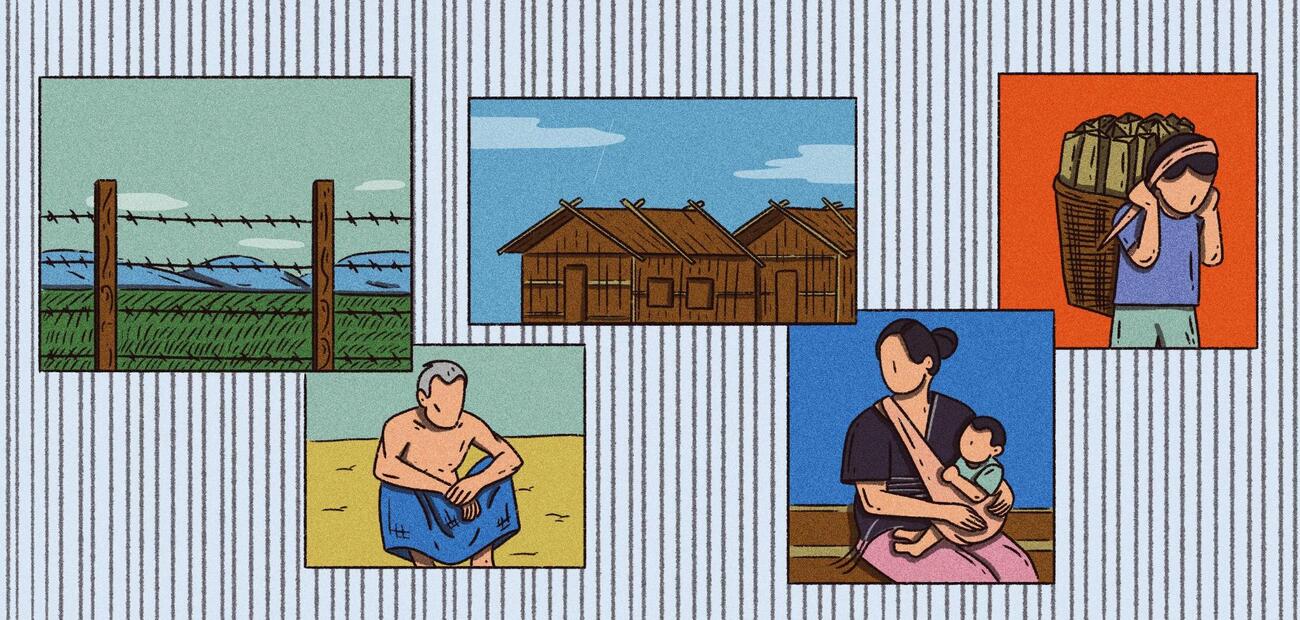
Earlier this year, I finally stepped foot into a refugee camp I had seen in a documentary years ago. Looking down from the highway at the tiny houses clustered on the steep mountain slopes near the Thai-Myanmar border, it was instantly clear how difficult long-term living here must be. Yet, people who fled Myanmar’s decades-long civil war have been living in this place for nearly 30 years.
I was on an assignment for a news agency to visit the camp a year after the Trump administration abruptly cut off U.S. foreign aid in early 2025.
Most of the residents here are ethnic Karen from southeastern Myanmar, as well as the country’s Muslim minorities who have been denied citizenship, even though they were born and raised there. Because the Thai government is not a signatory to the 1951 Refugee Convention, they only recognise those who have fled Myanmar as temporarily displaced.
These communities have been heavily reliant on international aid for decades, so the pullout of USAID hit them hard. The sudden funding cut forced hospitals operating in refugee camps like this to close, leading to tragic and avoidable deaths. The camp’s once-vibrant youth centre now sat padlocked and abandoned.
Even though winter was almost over and temperatures in the city were warming up, it was still bitterly cold here. The houses here are topped with rusted tin roofs, and the walls are made of split bamboo and tarpaulins. They offer almost no protection against the cold, leaving residents shivering every time the wind blows. A camp official explained to me that if anyone cuts down trees from the surrounding forest to build homes or collect firewood, the forestry authorities crack down harshly on them.
Over the two nights I stayed in the camp, even wearing a winter jacket, socks and gloves wasn't enough to keep warm. I took a bath just once in a small concrete pool storing collected mountain stream water. "You got lucky today," one of the refugees told me. "In recent days, the water in the pool was frozen solid, and we had to break the ice just to use it."
Many people I spoke to at the camp had lived there from 15 to 20 years. Some had married and raised children right here in the camp, giving rise to a whole new generation. These people are living proof that even long before the 2021 military coup, Myanmar was driving its own people away from their homes, leaving them without peace.
Back when I was in Myanmar, I used to hear people say that refugees are just living off handouts and don't want to work. But the truth is often that they are not allowed to.
Some venture out to work illegally with no protection from bad employers, quietly enduring exploitation at workplaces. If luck turns against them and they get arrested by the police, they often have to pay bribes that cost far more than their actual wages just to resolve the situation.
These ongoing employment struggles have brought a rise in drug abuse and domestic violence. During my stay, I was allowed to observe the camp's judicial committee adjudicating a domestic violence case. A camp official mentioned that in early 2026 alone, there had already been about five cases like this.
Recently, the Thai government introduced legal work permits for those aged 18 to 35 in the camps, allowing some to find work. However, they are restricted to low-level jobs that Thai citizens don't want to do, and many end up returning after running into difficulties.
Even though many in the camp were eager to share their hardships with a journalist like me, they were hesitant and fearful because they lacked official permission to speak publicly, so I had to take time to slowly build trust with them.
I managed to produce written articles, audio pieces, and photojournalism reporting on the camp.
About two months later, the European Union announced a new aid program worth around €15 million (approximately 57 billion MMK) for Myanmar refugees in Thailand.
I feel deeply glad that I contributed as much as I could to raising awareness of the situation there. However, the stipend I received for this assignment barely covered my basic travel expenses, and I simply don't have the resources to publish another news piece right now. For journalists like us to keep bringing the voices of these refugees on the pages, what we desperately need is fair compensation and stable financial support.
The artwork is by JC who is receiving support from The Kite Tales to produce illustrations.