The author is a journalist from Shan State. They received support from The Kite Tales to write these diaries.
At the beginning of 2025, four years after the military coup, it seemed like the dictatorship was on the verge of collapse. Pro-democracy forces and ethnic armed groups were seizing huge swathes of territory across the country, including major towns. Operation 1027, first launched in October 2023, brought most of northern Shan State, on the border with China, under the control of powerful ethnic armed groups. However, a vital border town remained under regime control, an island in a sea of rebel territory.
Still, the military struggled to effectively govern the one town it still controlled. The town was (and still is) rife with theft, robbery, looting, and kidnappings. The situation is so dire that people are afraid to even help each other, instead living in mutual suspicion. Today, with support from China, the military regime has taken back some of the land it lost, both on the battlefield and at the negotiating table. But one thing remains unchanged: the regime is unable to provide basic services to those in its territory.
Border blues
When I arrived at the border gate to return to Myanmar after a short trip to China, a huge crowd was forming.
"Is there still time to cross today?" I asked someone in line.
"It's uncertain if we'll make it today,” they said. “It's already late. Even if we queue, we might have to stay overnight. Early tomorrow morning, though, is pretty certain."
Local residents can officially cross into China without a visa. Both countries issue passbooks to those living in the border region, but the influx of people displaced by conflict or fleeing conscription has made it increasingly difficult for locals to use these once-easy border gates. The sheer volume of people crossing between China and Myanmar means long queues, and even small personal bags are subjected to intense scrutiny. I was carrying such a bag – filled with a friend’s clothing, shoes and bedding. Though I didn’t know it yet, this bag was about to ruin my day, and expose the dysfunction in society.
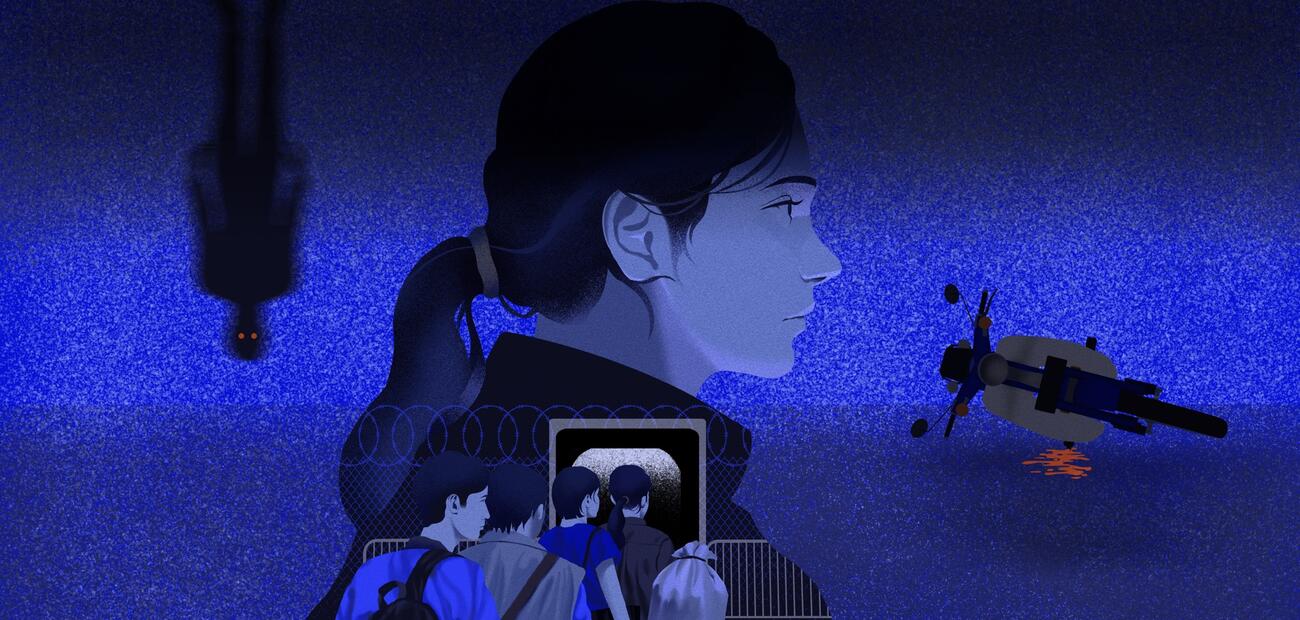
On the morning of my planned return, I arrived at the border gate as early as possible. Even so, hundreds of people were already queuing. I joined the line, and when I reached the Chinese side of the gate, a police officer glanced at my large bag and, without even looking inside, turned me away.
I knew that bringing large quantities of newly-purchased items from China back into Myanmar wasn't allowed. But this was just a friend's old clothes and bedding. She didn't even bother to check; she just saw the bag and rejected me without a chance to explain.
I saw many other people similarly turned away, and began to wonder, why are the inspections so strict? A truck driver told me it's because the Myanmar military negotiated with China to limit the flow of goods, aiming to cut off supplies to ethnic armed groups. It’s a plausible explanation. At the time, ethnic armed forces were in control of much of northern Shan, while China was trying to pressure them to sit down for peace talks with the regime. Military blockades made it difficult to source supplies from central Myanmar, so China was hemming them in on both sides.
That day, I had to wait until the police officer's shift changed before I could cross. The new officer on duty opened my bag, saw that the items were old and personal, and allowed me through.
A cry for help
Once I reached the Myanmar side, I realised I didn't have a rope to tie the large bag to the motorbike. After searching in vain, I wrapped the bag’s straps around my chest and awkwardly set off.
As I approached a small uphill section not far from my destination, the bag started to tilt. Realising it was about to fall, I pulled over to readjust it, but before I could, it slipped off the motorbike. Because the strap was tied around my chest, it pulled me down with it. I had parked close to a ditch, which the bag and I promptly tumbled into. Since I was still straddling the motorbike, it fell on top of me.
The motorbike's metal footrest dug into my calf while one of the handlebars landed near my knee, pinning me. I couldn't move my leg at all. My helmet was in pieces.
I cried out for help, hoping someone would come to my aid, but no one did. Some just stared from a distance, as I continued to shout for nearly half an hour. Finally somebody got out of a passing car and helped move me, my motorbike and the bag to the side of the road. Only then did the other onlookers approach. My leg, however, was completely unable to bear weight.
"We were afraid of getting involved in a case," a woman told me. "Here, if something happens, no one dares to help. They're afraid of being robbed or shot."
In Myanmar there is an enduring fear that criminals will stage road accidents, then rob good Samaritans who stop to help.
I was astonished. "I just fell when my bag slipped," I explained.
I was lucky to get any help at all. An auntie told me she was once robbed at a busy market in broad daylight.
"I was coming back after exchanging some Chinese money, and went into the market briefly," she recounted. "I had my sling bag over my head. Two young men on a motorbike snatched it and sped off. People nearby just watched; no one dared to help. They were probably afraid something would happen to them too."
She told me she lost all her money, her ID card, and her border passbook.
When she went to the police station to report it and apply for a new border passbook, a police officer told her not to say she was robbed, but that it "went missing," so that it wouldn’t be officially reported as a crime.
The people who gathered around called an ambulance, but after an hour of waiting, one woman offered to take me to a clinic on her motorbike. On the way, we met the ambulance, and I was finally taken to a private hospital.
I was on a bed in the outpatient ward, blood streaming from my leg. Nothing was being done. The hospital staff said the doctor hadn't arrived yet. When the doctor finally came, an hour later, he said I needed an X-ray, but the technician hadn’t arrived yet. In the end, it took almost half a day to get emergency medical treatment.
"It's even worse at the public hospital," a woman told me.
The artwork is by Songbird who is receiving support from The Kite Tales to produce illustrations.